John and William Bartram experienced the Revolutionary times in the U.S. as anxious observers and sometimes reluctant actors whose scientific and Quaker worlds were drawn into a political crisis. Their experiences show how the conflict disrupted intellectual networks, threatened property, and forced pacifist naturalists to choose sides or at least navigate between them.
John Bartram’s Life in Relation to the Revolution
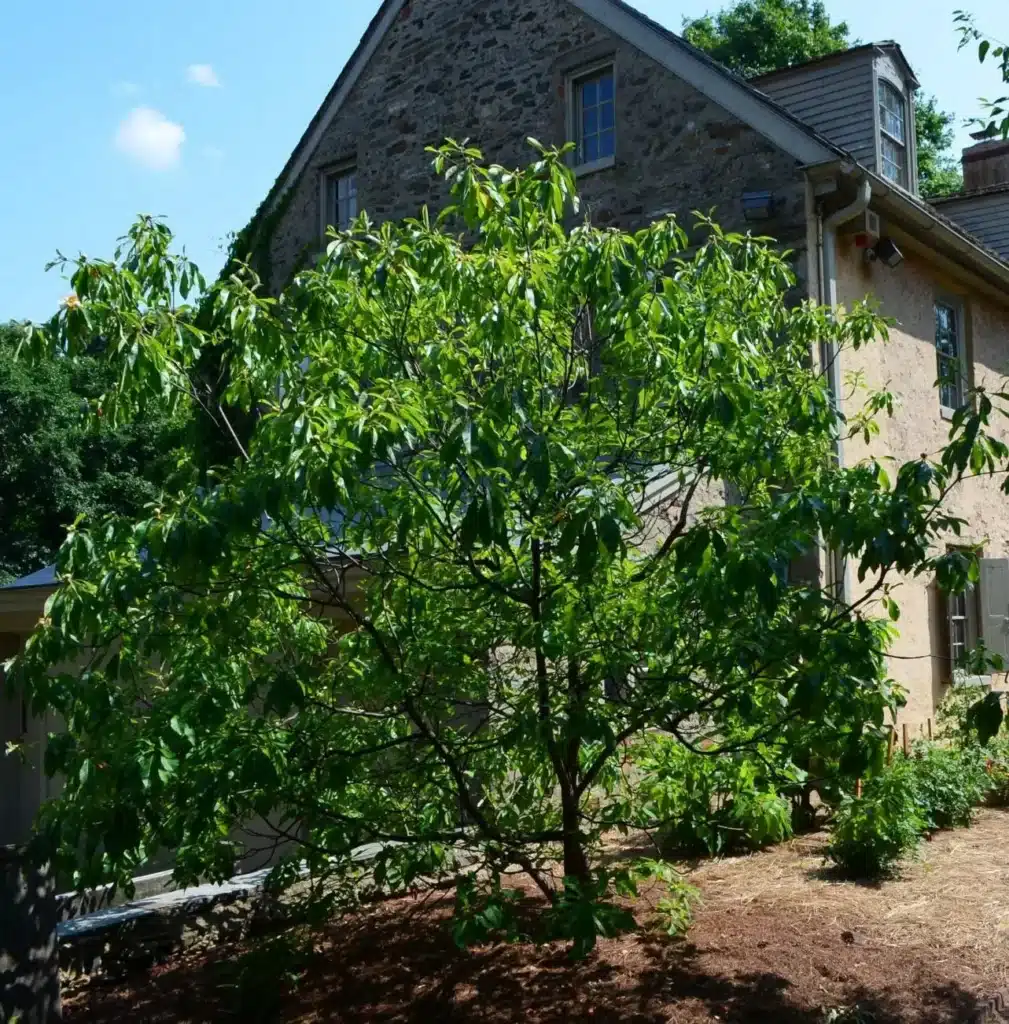
As imperial tensions rose, John’s garden and its surrounding farm lay close to key Revolutionary War movements near Philadelphia. Family recollections later described him in 1777 as deeply disturbed by the approach of the British army after the Battle of Brandywine, worried that troops might devastate the garden he had built over decades. He died in September 1777, amid the military campaign around
As imperial tensions rose, John’s garden and its surrounding farm lay close to key Revolutionary War movements near Philadelphia. Family recollections later described him in 1777 as deeply disturbed by the approach of the British army after the Battle of Brandywine, worried that troops might devastate the garden he had built over decades. He died in September 1777, amid the military campaign around Philadelphia, experiencing the war primarily as personal anxiety over possible destruction of his life’s work rather than as an ideological crusade.
William Bartram’s Southern Travels on the Eve of War
William Bartram, John’s son, spent much of the buildup to the Revolution far from the main centers of protest as he explored the Southeast from 1773 to 1777. Commissioned by British patrons to document plants, animals, and Indigenous societies, he ranged through Georgia, the Carolinas, Florida, and Creek and Cherokee territories, often skirting coastal towns where political tensions were most intense.
Even so, he repeatedly encountered the war’s frontier dimensions. In Georgia and East Florida, he moved through zones of raids and counter-raids between revolutionaries and loyalists, and his journals became an essential record of Native communities and landscapes as imperial conflict reshaped them. At times, he deliberately avoided towns like Augusta and Savannah, where Sons of Liberty activity made life difficult for those who sought to remain neutral.
A Pacifist Drawn into Conflict
William’s background as a Quaker inclined him toward pacifism, and his published Travels largely omits explicit discussion of the Revolution. However, private papers and later research suggest that neutrality was not entirely possible. In 1776, he briefly joined a revolutionary force on the Georgia-Florida frontier to help repel a rumored British invasion from East Florida, though no major battle occurred.
Other accounts indicate that he likely gathered intelligence for friends in the Patriot leadership, including General Lachlan McIntosh, and even took part in a skirmish against British troops and Native allies near the Florida border. These actions show a man trying to reconcile Quaker principles with his loyalty to his home colonies and to his network of revolutionary-leaning friends, such as Franklin and Jefferson.
Aftermath: Rebuilding and Remembering
After returning to Pennsylvania in 1777, William was at Kingsessing when the war came dangerously close during the Brandywine campaign and the British occupation of the Philadelphia region. John’s death that year left William and his brother John Jr. to safeguard the property and ultimately turn Bartram’s Garden into a postwar commercial nursery that supplied plants to American and European customers.
In the decades after independence, William lived quietly near Philadelphia, remaining connected to the emerging American scientific community and occasionally corresponding with leaders such as Jefferson. His later diary note celebrating the Fourth of July, marking it as the anniversary of American independence, suggests that, in retrospect, he embraced the new nation whose birth had troubled and endangered the Bartram family’s world.
Some Selected links that touch on the Bartrams in the Revolutionary time:
All Things Liberty. “Following William Bartram’s Footsteps in Northeast Florida.” June 1, 2021. https://allthingsliberty.com/2021/06/following-william-bartrams-footsteps-in-northeast-florida/.
American Heritage. “The Memorable Bartrams.” January 31, 2004. https://www.americanheritage.com/memorable-bartrams.
American Philosophical Society. “William Bartram: The Borders of a ‘New’ World.” Accessed November 21, 2025. https://www.amphilsoc.org/museum/exhibitions/sketching-splendor-american-natural-history-1750-1850/william-bartram-borders.
Bown, Stephen R. “Stories / William Bartram.” Accessed November 21, 2025. https://www.stephenrbown.net/story-william-bartram.php.
Cashin, Edward J. “William Bartram in Georgia.” New Georgia Encyclopedia, August 25, 2021. https://www.georgiaencyclopedia.org/articles/geography-environment/william-bartram-in-georgia/.
Encyclopedia of Alabama. “William Bartram.” September 21, 2023. https://encyclopediaofalabama.org/article/william-bartram/.
Florida Museum. “William Bartram – Artist-Naturalists in Florida.” September 20, 2012. https://www.floridamuseum.ufl.edu/naturalists/bartram/.
Georgia Historical Society. “William Bartram.” Teacher Guide, 2006. https://georgiahistory.com/wp-content/uploads/2014/06/Bartram-Teacher-Guide.pdf.
Philadelphia Encyclopedia. “Bartram’s Garden.” February 20, 2022. https://philadelphiaencyclopedia.org/essays/bartrams-garden/.
Thomas Jefferson’s Monticello. “John Bartram and Bartram’s Garden.” November 7, 2020. https://www.monticello.org/research-education/thomas-jefferson-encyclopedia/john-bartram-and-bartrams-garden/.